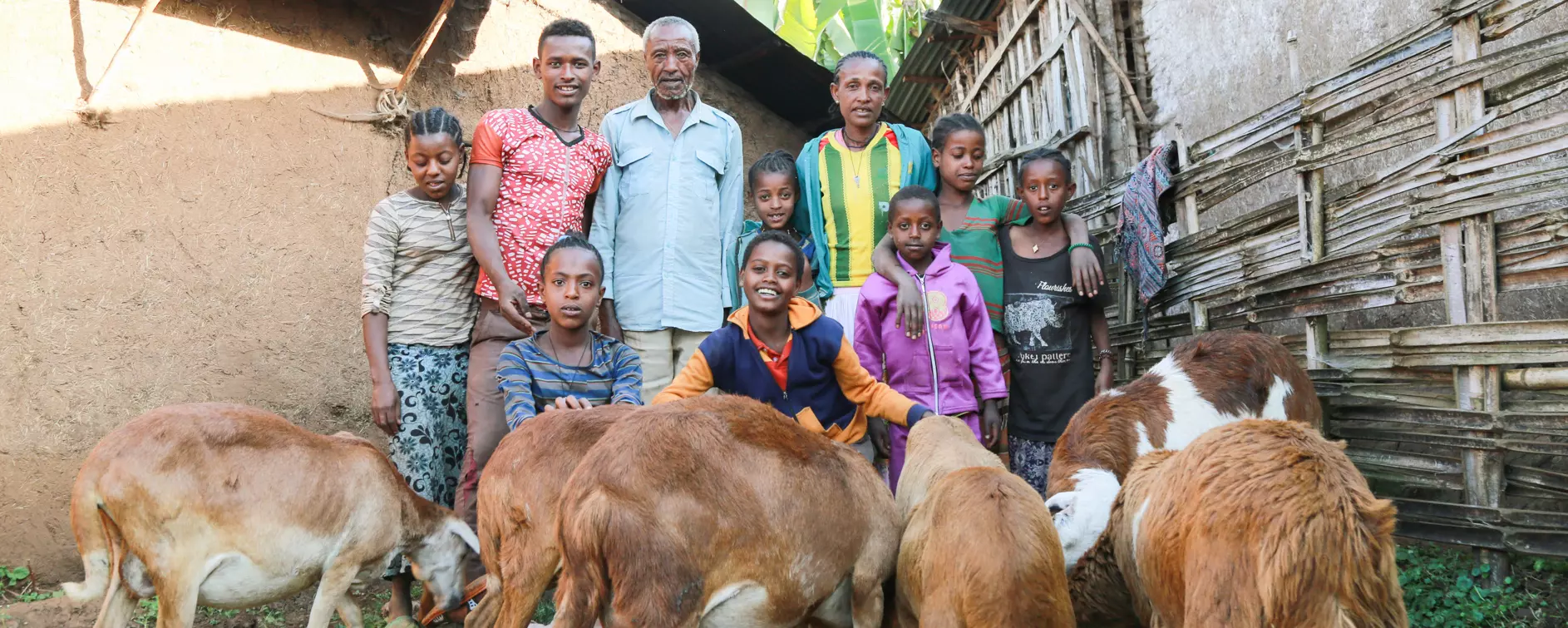
For pastoralists in Africa’s drylands, a sheep or goat is a source of milk, a meal for many, a valuable asset, a last resort in hard times. So when many animals fall sick and die, it’s a tragedy with far-reaching impacts on families, communities, and even nations.
Sheep and goat plague, or peste des petits ruminants (PPR), is a highly contagious viral animal disease that was first described in Côte d'Ivoire in West Africa in 1942, and has since been spreading through Africa, the Middle East, Asia and most recently Europe.
When the virus reaches a new region, it can infect up to 90 percent of a herd. Small ruminants like goats and sheep come down with a fever, cough, diarrhoea, weeping eyes and runny noses—and as many as 70 percent of them die, a life-changing catastrophe for their owners. The International Livestock Research Institute (ILRI) works on many livestock diseases, but sheep and goat plague is a priority.
The disease threatens the livelihoods and food security of 300 million families worldwide, causes annual economic losses of up to US$2.1 billion, and often affects women in rural developing economies, many of whom keep small ruminants while their husbands herd cattle.
Outbreaks can destabilise regional security, and reverse decades of development gains.
“If people lose all their livestock, they become destitute. It’s like having your house burned down every couple of years,” adds ILRI principal scientist Theo Knight-Jones.
An effective vaccine exists, but must be kept cool. In many African countries, electricity is unreliable, and pastoralists follow their herds through landscapes that are remote, sparsely populated, and extremely hot. To reach them, vaccines are packed into ice boxes and transported over dirt roads by motorbike or bicycle.
“In some parts of Mali we can have temperatures up to 50 degrees Celsius,” says ILRI senior scientist Michel Dione, who leads the organisation’s PPR research in West Africa. “The ice packs do not always survive the journey—and the veterinarians administering the vaccines do not always know if the vaccines they are administering are still effective or not.”
BEATING THE HEAT
Between 1994 and 2011, countries worked together to eradicate a devastating cattle disease, rinderpest, which is closely related to PPR. In 2015, attention shifted to PPR, with the Food and Agriculture Organization of the United Nations (FAO) and the World Organisation for Animal Health (WOAH) coordinating a global control and eradication strategy that aims to rid the world of the disease by 2030.
With rinderpest, the development of a thermotolerant vaccine helped to tip the balance towards eradication, says Knight-Jones—more animals could be vaccinated, and the virus could no longer find enough susceptible hosts.
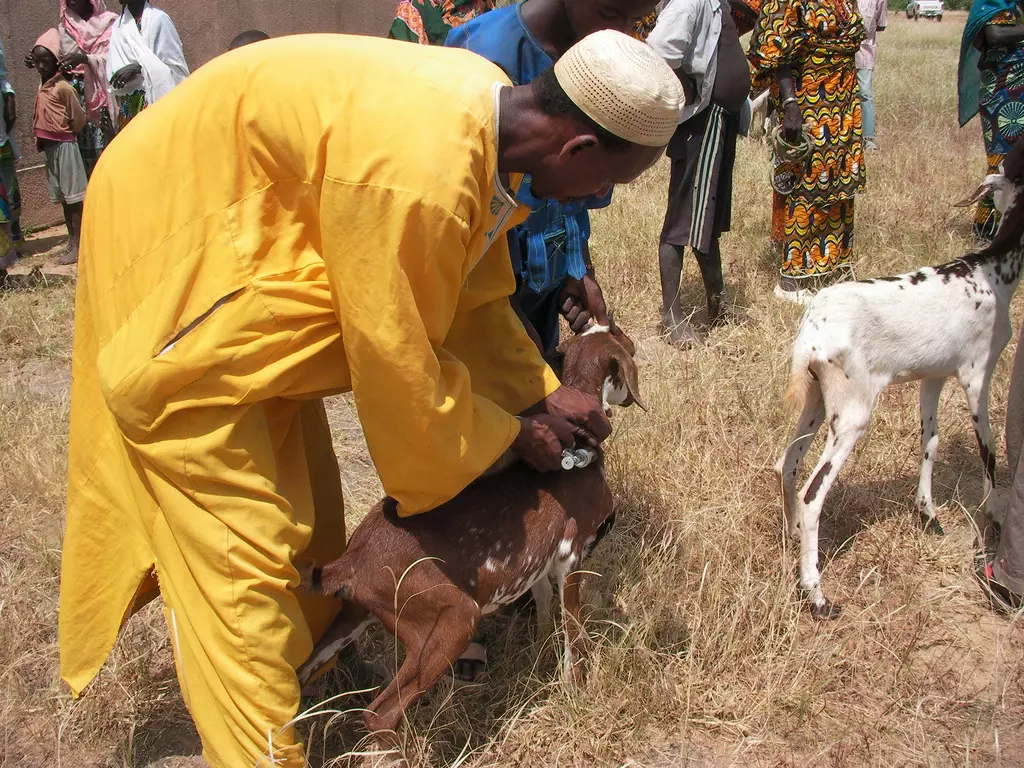
Building on that success, ILRI has worked with vaccine production company Hester Biosciences Ltd of India and Mali’s Central Veterinary Laboratory to create a thermotolerant vaccine for PPR, using the same freeze-drying technique developed for the rinderpest vaccine.
It is stable for up to nine days at 38.5 degrees Celsius, or for a week at 40 degrees. “This is a huge advantage in the Sahel,” says Dione. Field trials in Mali in 2022 showed 99% percent of sheep and goats that received the new vaccine were protected from PPR.
ILRI is now working with the Gates Foundation to develop a scaling strategy for Mali and the region, while the African Development Bank has provided funding to scale up production and delivery of the new vaccine in Mali. The first step is a vaccination drive aiming to deliver 1 million doses—enough to protect the herds of around 35,000 families in central Mali.
ILRI scientists are also designing studies to quantify the added value of the vaccine’s thermotolerance—though it’s widely expected to reduce transport costs and improve vaccination effectiveness, Dione says.
But beating this disease requires more than technical tools. “On paper, the solution sounds quite simple, but getting it done is extremely challenging,” says Knight-Jones.
TACKLING DISEASE ECOSYSTEMS
To control PPR, countries need to know where outbreaks are happening, and be able to quickly mobilise vaccination campaigns with enough vaccine supply to reach a critical mass of animals in high risk areas. To keep ahead of the disease they need to deliver vaccination regularly and react quickly, since PPR is a fast-spreading disease and sheep and goats have a high population turnover, with numerous newborn animals needing to be vaccinated before the infection finds them.
Governments and NGOs also need to make farmers aware of the value of vaccination—and involve local people, especially leaders, in the vaccination process. And they need to collaborate closely with their neighbours.
“Vaccination programs are run by countries, but diseases occur within ecosystems,” says Mulongo.
In West Africa, pastoralists roam with their herds across the region’s porous borders—places where conflict and unrest can also make it difficult to deliver vaccines. Unvaccinated herds in a neighbouring country can provide a reservoir for the virus, allowing for constant reinfection.
This is where ILRI comes in, says Knight-Jones—as a global institution based in Africa with a mandate to support smallholder famers. “I think we've built good relations with our government partners. They trust us and look to us for expert support. If you need someone to link up across many countries, and provide technical and research support in international projects, there's probably no one else who can do it the way that ILRI can.
ILRI scientists are working on a wide range of studies and materials to support countries across West Africa—where PPR is endemic—to control and ideally eradicate the disease. They have also co-developed a vaccination strategy—a process for countries to work through—that has already increased vaccination coverage in Mali.
Other researchers are developing a DIVA test for PPR, which will distinguish between vaccinated and previously infected animals. When it’s ready, ILRI scientists will trial it in the field—helping governments to better track the success of vaccination programs.
Dione’s team also created a training manual for vaccinators, which is being used by French-speaking countries in West Africa. ILRI researchers are also working with other partners to sequence the genome of the PPR virus, enabling scientists to monitor its evolution, virulence and spread.
CHANGING LIVES
Eradicating sheep and goat plague will improve the lives and livelihoods of some of the world’s poorest people. It will save developing countries millions of dollars a year in lost income, and reduce the need for international food aid.
Eradication will also prevent the disease spreading to new countries, such as in Southern Africa and Europe. PPR was recently detected in Romania and Greece, leading to movement controls and the culling of thousands of animals. “A failure to control it in Africa and other countries has contributed to it spreading into Europe,” says Knight-Jones.
Crucially, solving the PPR problem requires well-functioning connections between governments and remote pastoralist communities—pathways along which information, knowledge, and technical support can flow, in both directions.
Once established, such a network would also help governments, NGOs and the private sector to deliver other services that will improve the lives of smallholders and their animals—things like de-worming medication, feeds, or micro-insurance—providing livestock keepers with access to the services they need to lift themselves out of poverty.
--
Story written by Kate Evans, science writer