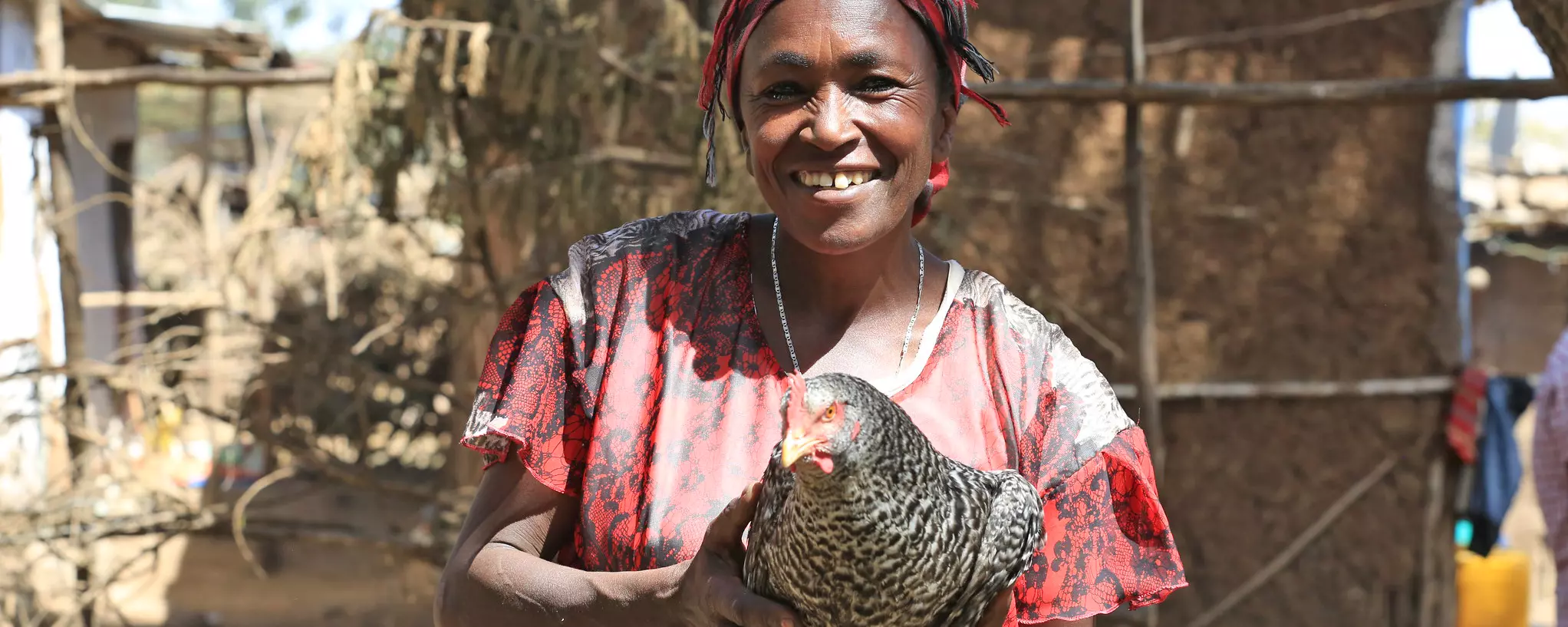
Women in business

How better chickens increase empowerment, boost profits and improve nutrition—and act as a feathered ATM for women

In many tropical communities, chickens are considered women’s business.  While male herders and farmers more often concern themselves with far-ranging cattle and camels, women and girls care for chickens in and around the home—a division of labour that suits traditional norms about men’s and women’s roles.

“Chickens fit into the daily schedules of women, and they can be fed from kitchen leftovers. They are under women's control, so sometimes they don't even have to ask permission or consult anyone else if they want to sell them,” says Immaculate Omondi, a gender research economist at ILRI.  “Mostly, men don’t pay much attention to chickens.”

Typically, though, the chickens kept by rural women have not been particularly productive or resilient. Many die, and these farmers have had difficulty accessing good breeds and vet services—making chickens a low-input, low-output livestock system that in the past has lacked investment or development.

But over the past decade, ILRI and partners' African Chicken Genetic Gains project, and its successor Tropical Poultry Genetic Solutions (TPGS) have dramatically improved the livelihoods of smallholders across Africa—and more recently Asia—by identifying vastly more productive chicken breeds that thrive in tropical village conditions—and that farmers love.

Three breeds, Kuroiler Sasso and Noiler, came out on top in Tanzania, Ethiopia and Nigeria. Under local farmers’ management, the new birds grew twice as fast as indigenous breeds. Egg production also doubled, meaning farmers could triple their original income from chicken farming. At the same time, mortality rates fell from 50 percent to just five percent, since the chicks were already vaccinated and well-nourished when the farmers received them at cost.
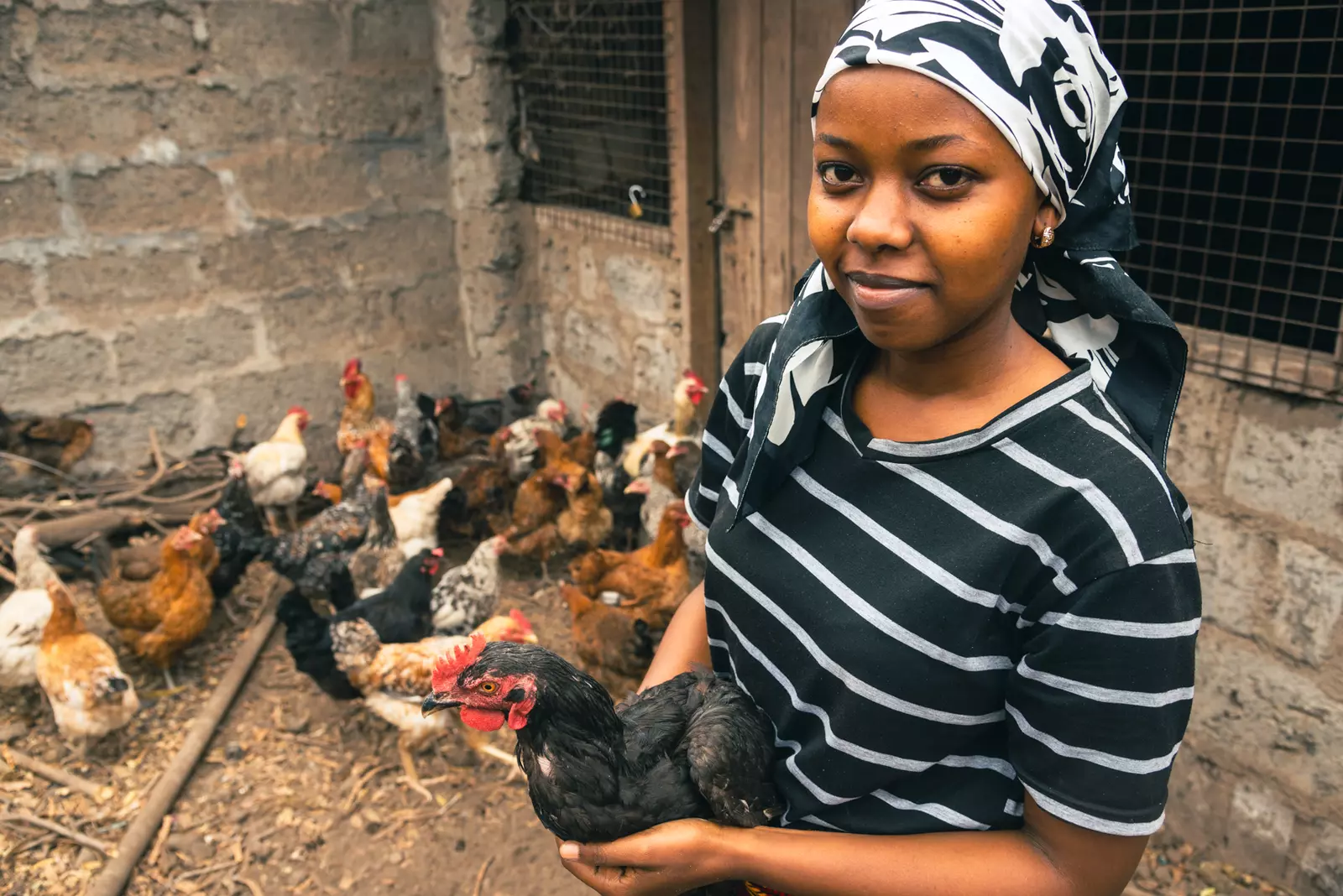
Brenda Urassa, Tanzanian poultry farmer
Brenda Urassa is a brooder in Tanzania who raises day-old Kuroiler chicks to four weeks old, vaccinating and feeding them to ensure they reach farms healthy and ready to thrive. Credits: ILRI/Stefano Bianco

Crucially, the program didn’t stop with published results, says Tadelle Dessie, a geneticist at ILRI and the TPGS program leader. Instead, he and his team partnered with private national and international chicken hatching companies to start multiplying and supplying the preferred breeds at scale. 

Now, those companies are selling millions of day-old chicks to smallholders across Africa. The massive increases in productivity and resilience has meant traders all along the value chain can boost their profits, Dessie says. “Everyone in the value chain is getting his or her own share.”

In 2020, in partnership with the Australian Centre for International Agricultural Research (ACIAR) the program expanded into Southeast Asia, with promising results so far, Dessie says—four tropically-adapted and productive breeds have now been imported into Vietnam, and an indigenous breed improvement centre established in Cambodia—with eight Pacific Island nations next in line in 2025. ILRI has also set up indigenous chicken-breed improvement programs in Kenya, Ethiopia, Tanzania and Nigeria.

“Every country is different,” says Dessie. “We always provide the countries with different options in different contexts, and then our partners identify their preferred option for their context.”

WOMEN IN BUSINESS — TOGETHER

In Tanzania, it became clear that women farmers in the more remote areas weren’t always able to access these preferred productive poultry breeds, or markets for their chicken meat and eggs. Gender norms preventing women from interacting with unrelated men also frequently prevented women from buying chickens, or medicines or vaccines for their birds. 

So in 2019, ILRI researchers, the Tanzanian government, and local industry partners developed the Women in Business project, designed to improve access to the better breeds, boost nutrition, and contribute to women’s empowerment by increasing their income and decision-making power—an expansion and amplification of TPGS.

For the pilot in Tanzania’s Lindi and Kilimanjaro regions, researchers recruited 20 recent female graduates from the local veterinary school, calling them up one by one on the phone to pitch the idea of a new chicken-centred career path. “At first they were doubtful, but it wasn't hard to convince them,” says Omondi.

They all attended a business development incubation by the NGO Tanzania Career Development Consultancy Company (TACADECO) and Sokoine University Graduate Entrepreneurs Cooperative (SUGECO), later a specific poultry industry training with the private chicken hatching company AKM Glitters. Then the brand-new chicken vendors bought stripy month-old black-and-white Kuroiler chicks from brooders—who most were women—then took the birds out into the countryside on motorbike taxis to sell to women farmers.

Four to six months later they’d return, buy back the hens, and sell them in town—forging for the farmers an ongoing relationship with a fellow female professional who could connect them to markets and help solve livestock problems.

The new chickens’ rapid growth and superlative egg production turned them a kind of feathered ATM for women, says Omondi—providing them with ready access to their own funds. “That was the idea: vendors make money, brooders make money, farmers make money, and then also families’ nutrition should be improved,” says Alessandra Galiè, ILRI’s Gender team leader and principal scientist.
 

BREAKING FREE

In the early stages of the project, researchers aimed to work within traditional gender norms—a method researchers call a gender accommodative approach. However, as Galiè had suspected, it soon became clear that the program couldn’t succeed without transforming some of those norms.

Vendors travelling to remote communities were frequently harassed by men. In addition, sometimes a female farmer would face opposition from men in her family—at first, casting doubt on her chances of success, and if she did succeed, pressuring her to give up the business or taking it over themselves.

So the ILRI team worked with Shujaaz, a youth-focussed social enterprise working in Kenya and Tanzania, to develop a social media campaign—and later, in-person outreach—to try to shift some of the norms. The aim was to “normalize the idea that women can be successful business people, and to promote the image of men who support women in business—to slowly show the positive sides of breaking some of these restrictive norms and provide new role models for young men,” says Galiè.

After four years, most of the 20 women vendors involved in the project were still in business and have expanded their operations. Many members of the cohort bonded and continued to support each other after the training ended. Around 60 percent reported increased decision-making power, entrepreneurial skills, and greater inclusion within their households.

“Some of them were doing extremely well—they had bought a motorbike and had around 300 customers,” says Galiè. One of them, Upendo Ramadhani Simba, told ILRI’s podcast The Boma the business development skills she received was one of the most rewarding aspects.

I came to love it so much. You can get the profits in a very short period of time. I was so interested in keeping chickens and helping other people to keep them. Lots of women wanted to keep poultry, but they didn’t have good sources. So after we introduced this, it became easier for them.

The researchers used a standardised tool to measure women’s empowerment among the women farmers. The results showed that women keeping the improved chickens were more empowered than those keeping indigenous breeds—with greater control over their livestock activities, increased asset ownership, improved financial independence, and better family nutrition.

Preliminary results indicate a significant relationship between keeping chickens, empowerment and household nutrition, says Omondi.

“The one detail is that it doesn't speak to causality,” adds Galiè. “So we cannot say whether improved chickens support women's empowerment, or whether women's empowerment is necessary to purchase improved chickens,” she says. Future research will explore this very question.
 

A REASON TO LIVE

The analysis revealed a few surprises, too. The social media campaign appeared to do such a good job promoting the chicken industry to young people that some men decided to start their own chicken businesses, Omondi says—a reminder that more equitable norms benefit everyone, says Galiè. And when it comes to chickens, there’s plenty of work to go around, for men and women alike, she says. 

The market potential is not quite infinite—but almost.

Other men who were initially sceptical of their wives’ business efforts came around and began to support them once they saw how successful they were. 

But although overall the chicken farmers were more empowered, their work-life balance worsened. “Women farmers already have their own roles in the household, and now this also becomes an additional chore,” says Omondi. A new ILRI project is testing ways to reduce women’s drudgery, including labour-saving livestock innovations and child-care provision. 

In the meantime, USAID is implementing the Women in Business model in two more countries. In Lindi and Kilimanjaro in Tanzania, local governments are implementing their own version of the project—and in Kilimanjaro, authorities have changed the eligibility criteria for some public business development funds to make sure women are eligible for financing to start their own businesses. Galiè cautions that transforming gender norms is likely crucial to the model’s success—and the safety of the vendors—so will need to be a part of any future scheme. 

For Dessie, the global success of TPGS is the highlight of his 40-year career. 

What is unique here is the linkage with private sector companies to multiply the technology and deliver at scale. The last 10 years, since 2014 when we started this project—I’m the happiest person, I’m telling you. And when you see a farmer, very poor, in a corner of Africa, who owns 200 birds, and she is telling you that she is sending her kids to school because of this project—it gives you a reason to live.

--

Story written by Kate Evans, science writer