Safer pork, healthier people

Putting food safety first in Vietnam

Just two decades ago, food safety was widely considered an issue for high-income countries—a kind of luxury good, a nice-to-have, but “not really key to development,” says ILRI’s food safety expert and epidemiologist Delia Grace

People thought food safety was about as important as ingrown toenails.

But starting in the early 21st Century, everything changed. In 2015, the World Health Organization published the results of a decade-long study, finding that the burden of food-borne disease worldwide was comparable in scale to the ‘big three’ of deadly illnesses: malaria, HIV/AIDS and tuberculosis.

“There was this sudden realisation by the donors and the big health organisations that we've got a problem as big as malaria, most of it is coming from animal sourced foods sold in traditional markets in Asia and Africa—and we've never invested anything in it, and we don't know how to do anything about it,” says Grace.

At the same time, people in low-income countries were increasingly worried about food safety. In Asia, a series of health scares made headlines—glow-in-the-dark pork, melamine-poisoned milk, forty-year-old frozen beef, fox and rat meat sold as mutton. “When you open the door in the night and your pork is glowing green, and the next time, it's twitching—these sorts of things make people think there's something wrong with my food supply,” says Grace.

A nationally representative survey in Vietnam found that food safety was consumers’ number one concern—trumping pollution, road safety, and domestic violence—and in 2010 the Vietnamese government brought in its first food-safety law.

Fortunately, ILRI was in the right place at the right time. It was one of very few organizations already working on food safety and studying traditional markets. As a post-doc in 2006, Grace was the only person in the entire CGIAR researching food safety risk analysis, the gold standard for assessing food problems. By 2008, she was leading food safety research in Vietnam, India and Africa.

Working with local partners, she and her team launched a new project, PigRisk, in 2012. It included the first-ever quantitative risk assessment of food safety in Vietnam—and one of the first for any low or middle income country.

RISKY BUSINESS  

Quantitative analysis is crucial, because humans are notoriously bad at assessing risk. Our intuitive sense of danger often doesn’t align with the things most likely to kill us. For instance, people tend to be afraid of flying and shark attacks, when driving and falling coconuts are vastly more dangerous. “People judge by what feels scary, not by looking at the numbers,” Grace says.

The same applies to food safety. 

Food is one of the things people feel a lot of fear around—but the things people worry about are often not the things that actually make them sick.

For instance, that luminescent pork was likely caused by Pseudomonas fluorescens, a harmless bacterium, while twitching meat simply indicates it’s extremely fresh—residual muscle activity in the tissues causes it to move.

So the ILRI team, funded by ACIAR and other donors, set out to study empirically what were the most important food-safety problems in the pork value chain in Vietnam. 

In 2013, researchers worked with government officials to set up a Food Safety Risk Assessment Task Force to build local capacity and oversight. The project supported by Tran Thi Tuyet-Hanh an environmental health scientist to investigate chemical contamination in pork—she found only minimal amounts—and included smallholders, wet-market vendors, slaughterhouses and policy-makers in their comprehensive analysis of the biological hazards.

“We innovated quite a bit with the methods,” says Grace. Unlike in high-income countries, most actors in the value chain weren’t routinely collecting data. 

But it can be gathered, at relatively low cost. You might not be able to  collect blood samples from 30,000 pigs. Instead, you sit with 200 farmers and you say, what makes your pigs sick? How many pigs die when your pigs get sick? What symptoms do you see? Do they get blotchy skin? These are experts, and they can provide us with information which we can then put into our models.

Another of the team’s studies found that a parasitic porkworm (Trichinella spiralis) and pork tapeworm (Taenia solium), which causes cysticercosis in humans, both had some impact, though the threat was diminishing in Vietnam as people built latrines and fenced off their pigs, disrupting the parasites’ life cycles. Avoiding eating raw or undercooked pork can reduce the risk further, says ILRI veterinary epidemiologist Fred Unger. “They are also relatively easy to control with vaccines  anti-parasitic drugs, which are very effective for tape worms in pigs at least.”

But the most serious threat by far, the study showed, was Salmonella poisoning.

SALMONELLA SCARE

PigRisk showed that as much as half of the pork sold in informal markets was contaminated with Salmonella. Around 17 percent of Vietnamese people risked getting sick every year because of eating pork, due to Salmonella poisoning. Foodborne diseases have a significant economic impact on Vietnam, with food-borne diarrhea alone costing the country approximately USD 6 million annually—equivalent to 1% of its GDP.

“Everywhere food comes together—the wholesale market for vegetables, the slaughterhouse for meat, the dairy cooperative for milk—massive contamination occurs at all of those points,” says Grace. In the slaughterhouses, pigs are typically killed on the ground, which often leads to Salmonella contamination through contact with the animals’ feces.

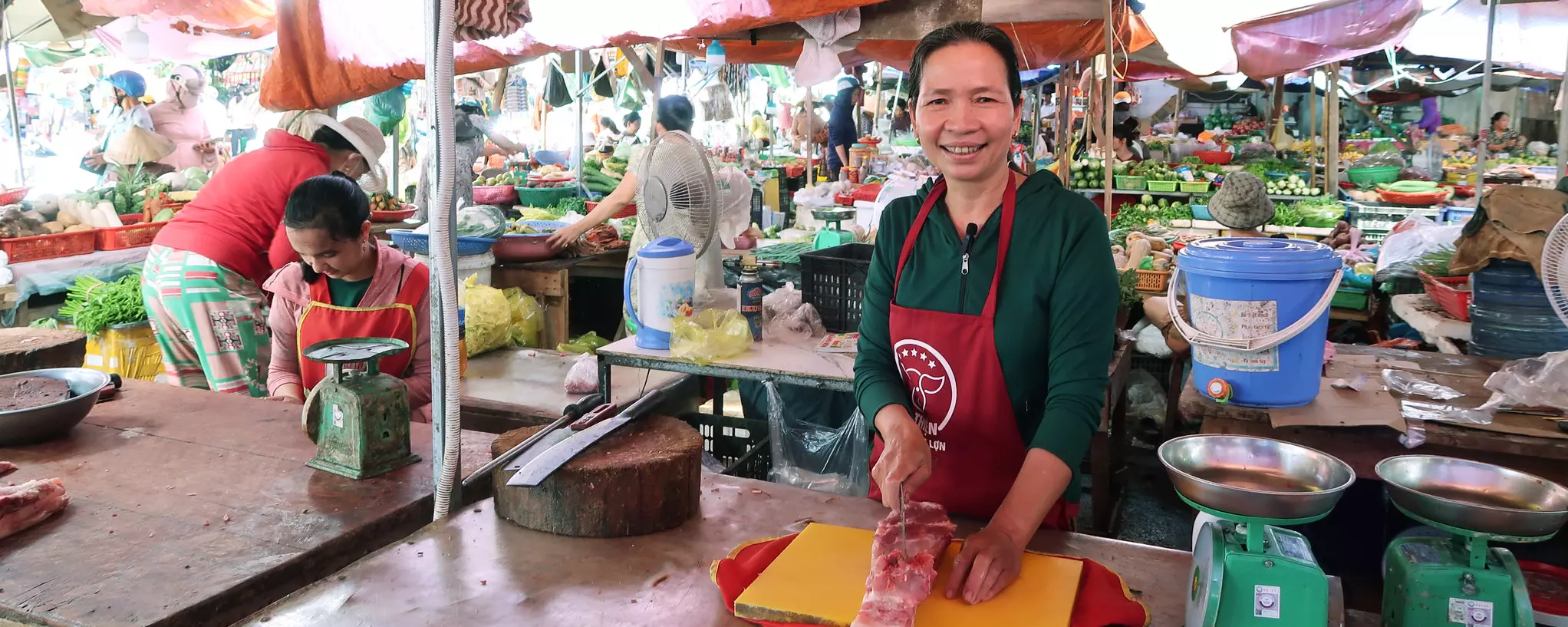
The presence of Salmonella in raw pork is not necessarily a problem, though, as long as you cook the meat—and many consumers were aware of the need to cook pork well before eating it. But during food preparation—in both the markets and in households—people often used the same knives and cutting boards for both raw pork and fresh vegetables, causing cross-contamination. When families ate the raw salad, they consumed the Salmonella bacteria and got sick.It’s important to note that wet markets themselves are only part of the problem, says Unger.

“We found in Cambodia and in Vietnam that supermarkets are not necessarily safer—they can be as safe or as unsafe as traditional markets. They may look nicer, but they keep the meat longer than in the market, so that if pork is contaminated during slaughter, the salmonella has more chance to grow,” he says. 

ILRI’s next project in Vietnam showed exactly that. 

Beginning in 2017, the SafePORK project tested interventions to improve food safety across the pork value chain. The researchers worked with 10 slaughterhouses and about 30 retailers in markets across the northern provinces of Hung Yen, Nghe An, Hoa Binh, and Thai Nguyen.

They offered training in hygienic management practices to more than 500 pork-sector workers, as well providing a simple technology to selected slaughterers and retailers.

For the slaughterhouses, they developed a metal grid, 20 cm high and tailored to the specific dimensions of each facility, to separate the carcasses from the contaminated ground. And in the markets, they gave pork retailers a pack containing a hygienic cutting board, knife, and a tray to keep their raw pork separate from the cooked meat and vegetables they sell.
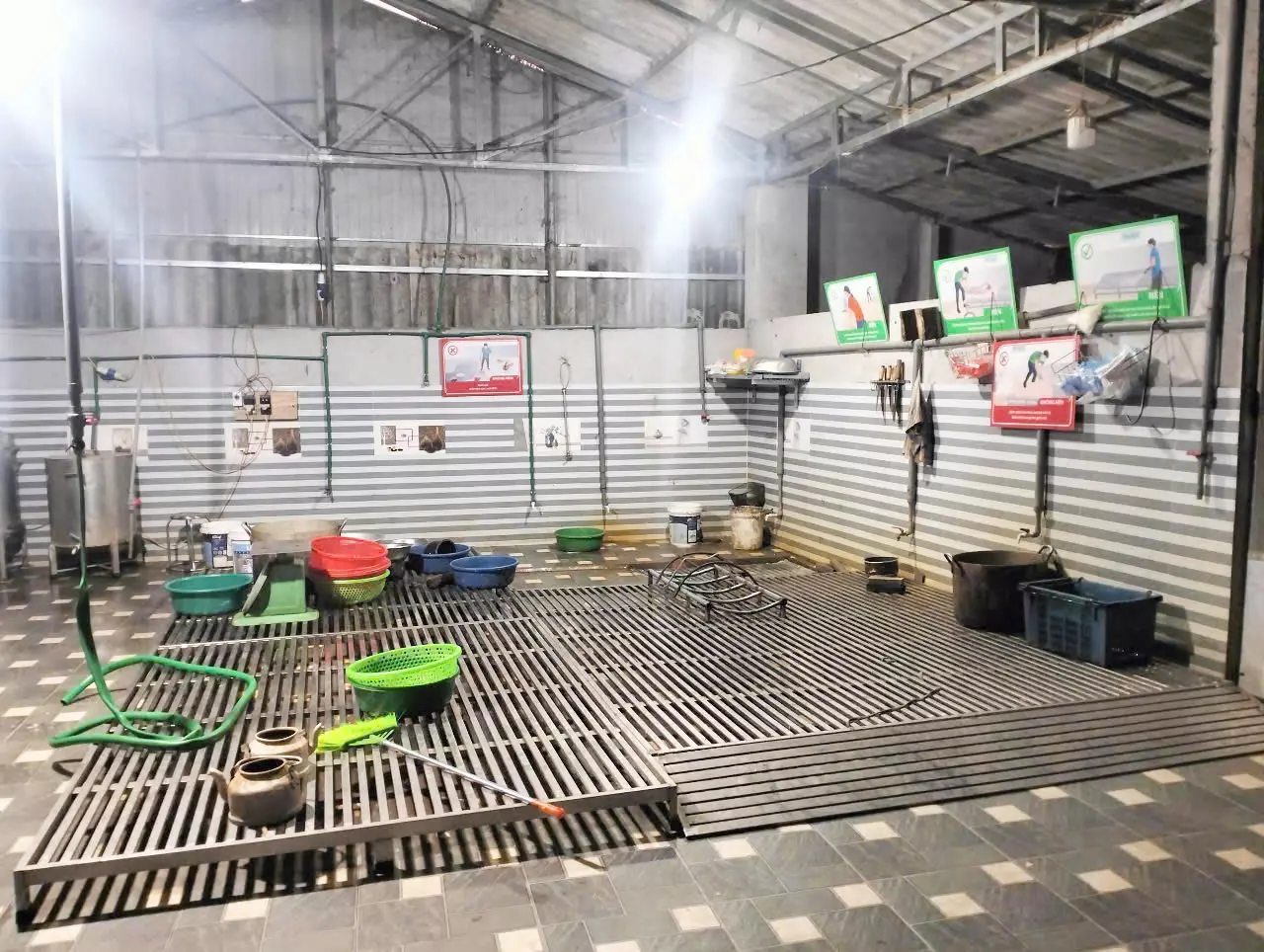
Grills at slaughterhouses
Simple innovations such as 20cm raised metal grid structures at slaughterhouses helped to reduce contamination of pork carcasses from the ground. Credits: Photo ILRI/Delia Grace

“Each little pack cost around US$35, which I think almost every retailer can afford,” says Hung Nguyen-Viet, interim leader for ILRI’s health research theme. At the same time, the researchers ran trainings for journalists about food safety, in an effort to improve public communication about the risks of food-borne illnesses while preventing panic.

After the intervention, the study found that the prevalence of Salmonella in retail pork decreased, on average, from 52 percent to 24 percent. “Of course, you don’t get it to zero,” says Unger. “But you reduce the hazard.” Subsequent studies showed consumers were willing to pay 20 percent more for safer fresh pork they could trust.

PEOPLE POWER

The next step for food safety is to scale up these interventions so they can have a wider influence, says Grace.

We have shown how big a problem food-borne illnesses are, how easy and cost effective the problem is to solve, and how all the incentives are aligned. The customers want it, the sellers want it. We haven't yet got it to scale.

Through Vietnam’s food safety task force, and Food Safety Working Group, ILRI scientists collaborated with the World Bank and Vietnamese officials on a food-safety risk management report they hoped would lead to a $100 million investment; it was scuppered by Covid-19.

From 2021 to 2023, ILRI led the CGIAR One Health Initiative, which conducted a randomised controlled trial of SafePORK’s piloted  interventions in five provinces of Vietnam. A similar project, Safe Food Fair Food, tested them in Cambodia. In addition, researchers added a food-safety rating program to give incentives to retailers and slaughterhouses to change their behaviour, and boost consumer awareness of food-borne disease risks.
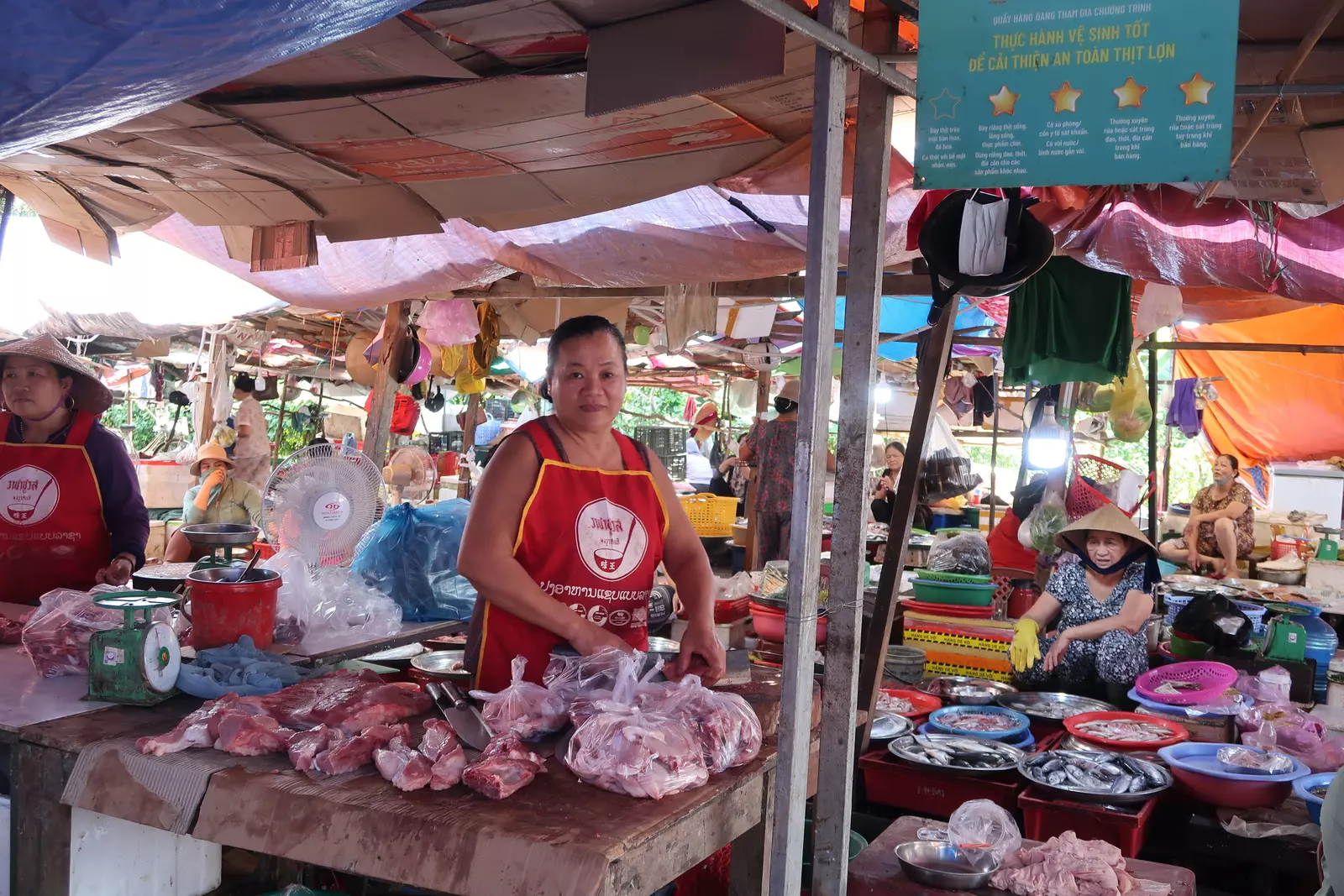
Wet market in Khe Tre Market in Thua Thien Hue Province
A retailer at a wet market displays a health rating placard at her stall as part of the food safety rating program to incentivize safer hygiene practices. Credits: Photo ILRI/Chi Nguyen

The results have been mixed, says Unger. While for Cambodia, the interventions reduced salmonella contamination by around 50 percent, about similar to SafePORK we found that food safety outcomes under the One Health Initiative differed for Vietnam. “We’re still analysing, but it seems that for some provinces of Vietnam, it works, it's promising. For others, it’s actually not that promising.”

Scaling up is a work in progress. But Nguyen-Viet is optimistic. Through research, partnerships, the food safety task force and a new working group, ILRI scientists and partners have been able to influence policy and build capacity in Vietnam, he says. “Sometimes we researchers can a bit too shy to speak out. We do good research, we publish in journals. But sometimes we don't take one step beyond that to knock on the door of policy makers, and propose things.”

In this case, we did. We were there at the right time. We talked to the right people. And it happened—we created the opportunity to develop more projects to improve the lives of people through safer food.

In the process, ILRI staff, led by Grace, recruited and trained more than 10 local Masters and 4 PhD students—scientists who might have ended up in another sector, but are now experts in food safety. 

It's just so good see these incredibly talented people working in a really important area which had truly been totally neglected. That’s really good for food safety—and human health.

--

Story written by Kate Evans, science writer