A decade ago, little was known about the greenhouse gas emissions produced by livestock in Africa. ‘We had little idea what the data looked like,” says system ecologist Lutz Merbold. “Emissions values were essentially guesses.’ Policy-makers and researchers extrapolated from experiments carried out on animals in the Global North, using these numbers to determine the emissions budgets for African countries.
Yet smallholder farming in the drylands and rangelands of sub-Saharan Africa differs greatly from farming in the Swiss Alps, North American feedlots or temperate New Zealand. Different breeds subsist on different feed in different production systems in different landscapes.
Having no field evidence for the continent’s real livestock emissions introduced significant uncertainty into global climate models, says Sonja Leitner, an ILRI ecologist.
Africa matters for global cycles. It matters for global emissions budgets. Even if we might not always be able to reduce emissions here, it's important to know how much is being emitted.
So in 2012, researchers established the Mazingira Centre at ILRI’s campus in Nairobi—a multi-disciplinary research hub dedicated to understanding the environmental footprint of African livestock systems.
They set up in an old unused building. ‘It had been used for experiments on rats, without any windows, without anything,’ says the centre’s founding team leader Klaus Butterbach-Bahl, an agroecologist. The team cleaned it up, added laboratories (and windows), hired technicians and scientists, and installed a wide range of essential equipment like gas chromatographs and livestock respiration chambers—then the only ones on the continent.
From the start, Mazingira had a nimble, innovative vibe, says Merbold, who led Mazingira from 2016 to 2020 and is now a visiting scientist. 'We were running the whole thing in rebel mode, with a start-up mentality.’
But very soon, the rebels began producing results.
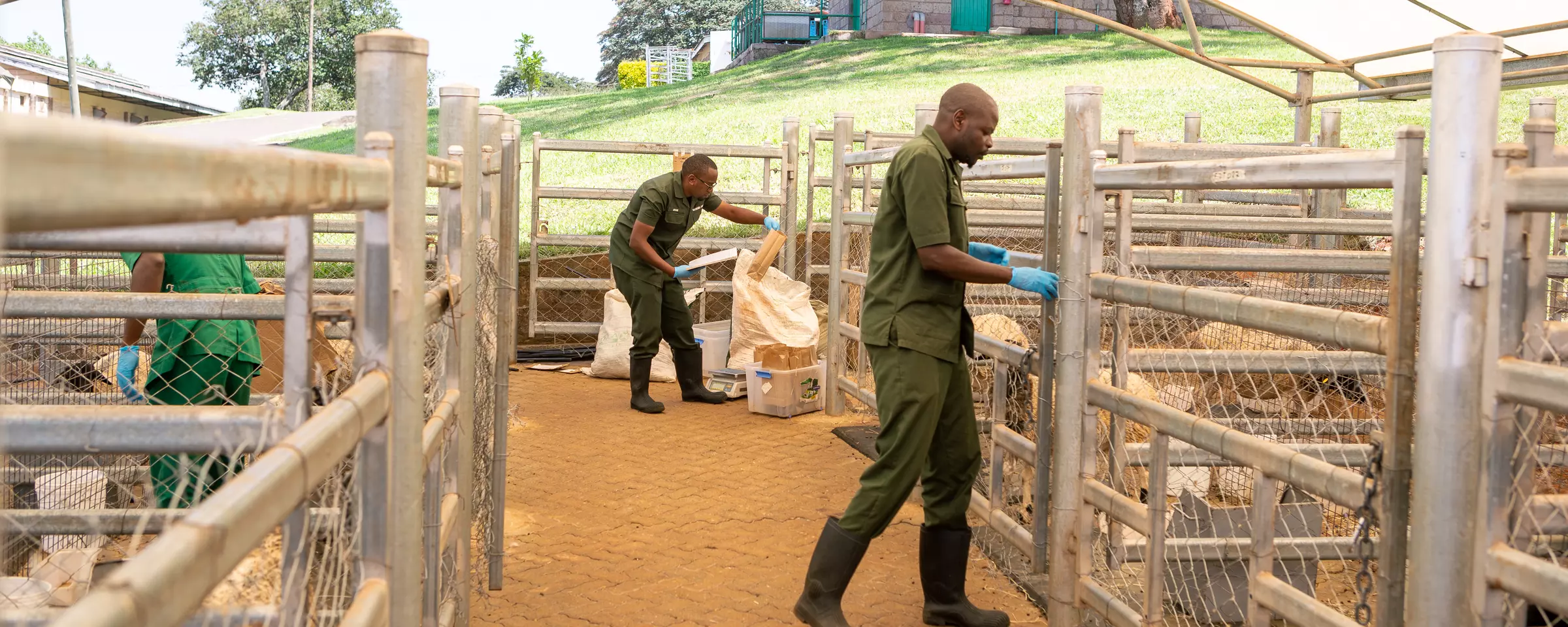
The scientists brought animals onsite and into the respiration chambers, and for the first time, were able to measure the greenhouse gas emissions produced by African cattle, eating African feed in African environmental conditions.
The first study found that underfed ruminants generally produce around 20 percent more greenhouse gases from a given amount of feed than well-fed ones—an important distinction in a continent where many animals (and people) go hungry. In 2019, Kenya updated its greenhouse gas inventory with the improved emission factors accordingly.
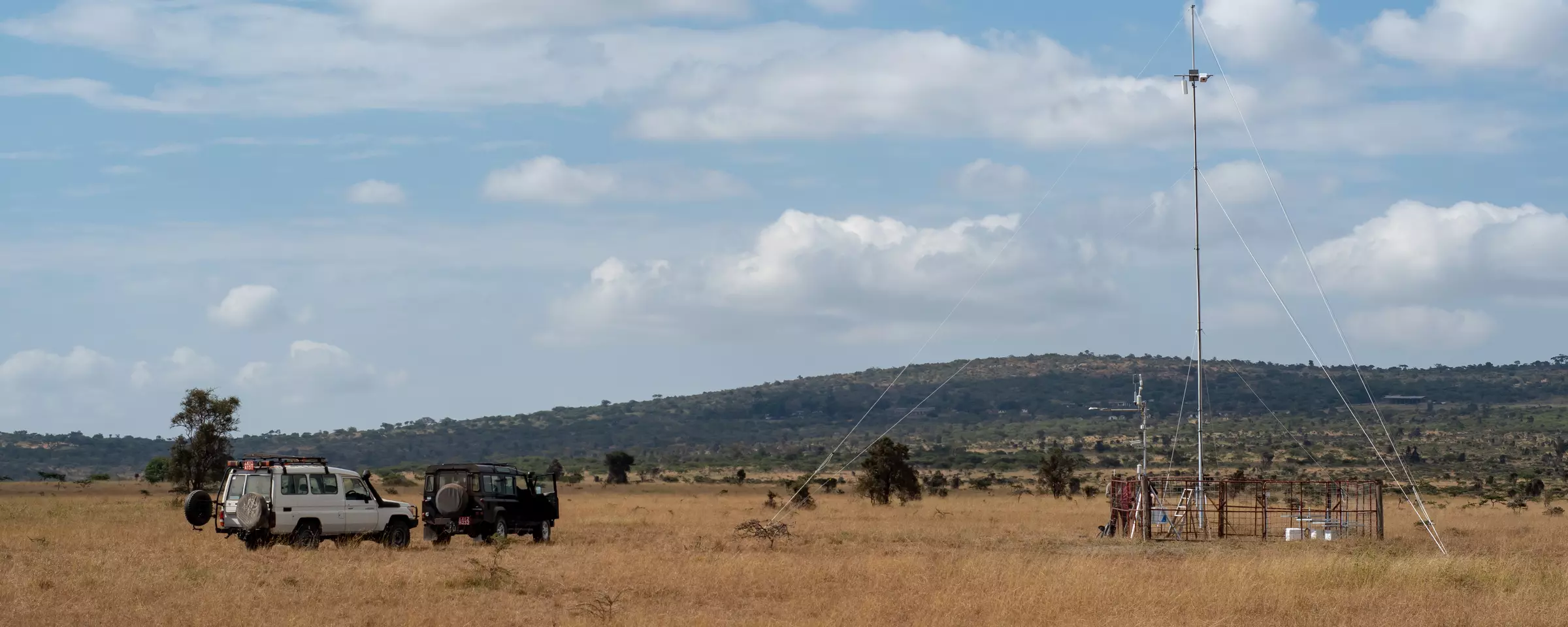
The team also built infrastructure to measure manure emissions. They found, for instance, that cattle manure heaps in Kenya emit 1.5-3 times less N₂O than had been predicted based on data from the Global North.
Butterbach-Bahl, Merbold and Leitner also found cattle bomas are overlooked N₂O hotspots, contributing as much as 32% of farm-scale N₂O emissions or 5% of total African nitrous oxide emissions
But the insights are not limited to livestock emissions in isolation.
‘We have the capacity to measure a lot of things here in the lab, which I'm quite excited about, because I like measuring stuff,’ says Leitner, who lead’s Mazingira’s soil, manure and ecosystem research team.
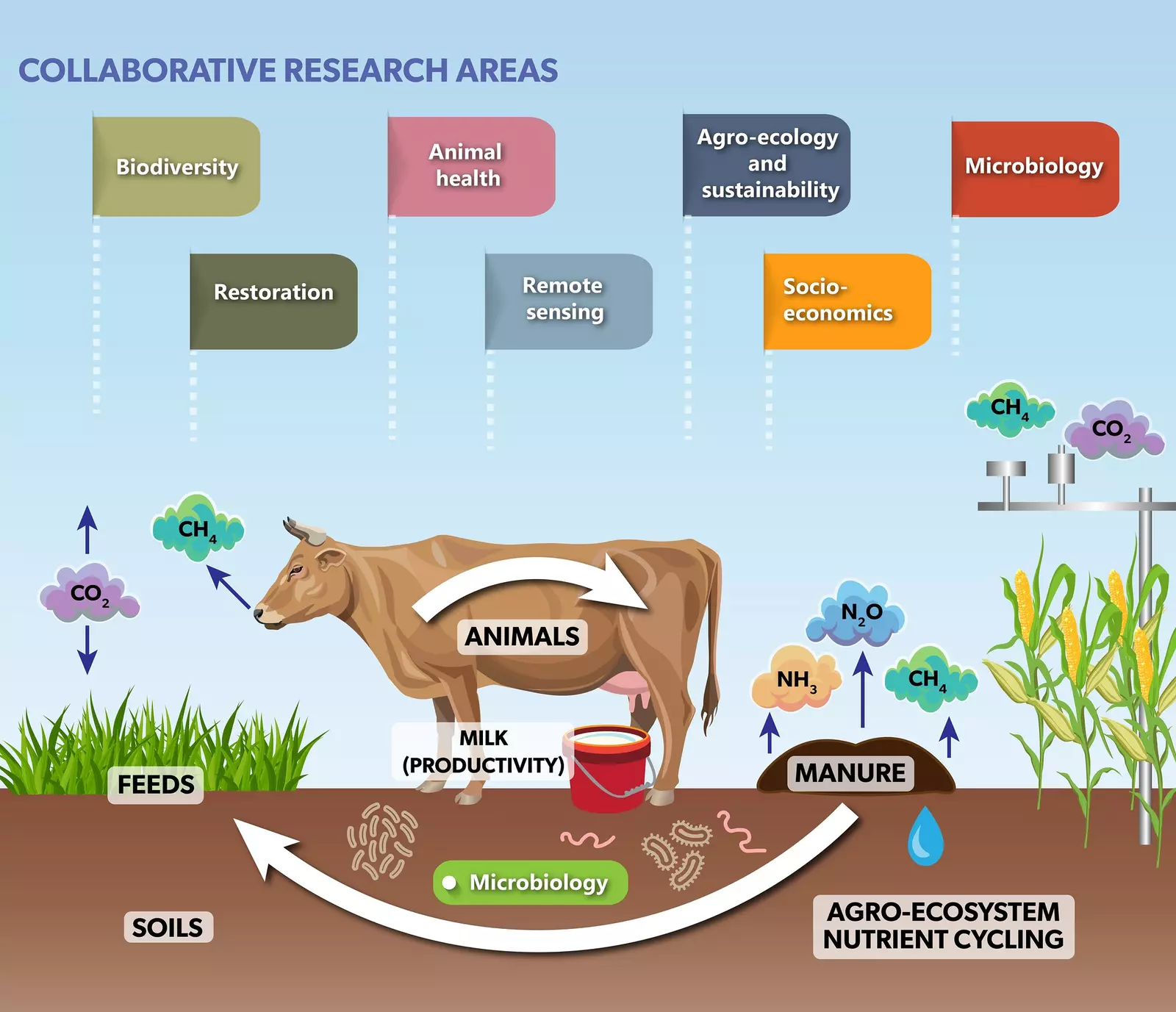
This diverse capability is especially important when it comes to the second part of Mazingira’s work: not just measuring emissions, but the more difficult task of testing solutions for reducing them. Yet smallholder farming in the drylands and rangelands of sub-Saharan Africa differs greatly from farming in the Swiss Alps, North American feedlots or temperate New Zealand. Different breeds subsist on different feed in different production systems in different landscapes.
THINKING IN SYSTEMS
Mazingira means ‘environment’ in Swahili, and from the start, the team wanted to ensure they took a holistic, systems approach to the work. Low-income countries, understandably, prioritise lifting their people out of poverty and improving resilience to climate changes by boosting livestock productivity.
‘Trying to find solutions to the greenhouse gas problem in smallholder systems is very challenging,’ says ILRI agronomist Anthony Whitbread, who leads ILRI’s Livestock, Climate and Environment Program, of which Mazingira is a part.
Methane-reducing strategies developed in the Global North—such as expensive feed additives for use in feedlots—often have little relevance in African farming systems, he says.
Emissions intensities are entwined with productivity, explains dairy scientist Claudia Arndt, Mazingira’s team leader since 2021—unhealthy, unproductive animals produce very little milk, for instance, while still belching methane. (A recent study by Mazingira scientists in collaboration with ILRI's health team and international scientists also quantified the emissions intensity and food-security implications of calf mortality and cows miscarrying.)
Research conducted at Mazingira is showing there may be ways to improve milk and meat production that also reduce greenhouse gas emissions per kilogram of protein—if not absolute emissions—while keeping animals and people healthier and benefitting the broader environment.
In Kenya, for instance, Mazingira researchers and collaborators found that packages of simple interventions—including raising fertility rates, and supplementing feeding—could raise productivity, reduce emissions intensities, and help the country meet milk yield goals by 2030.
In addition, Mazingira's animal team, in collaboration with ILRI’s forage team, is testing forages to find those that might reduce methane emissions from livestock. Mazingira lab manager Daniel Mulat has also installed biogas facilities and is leading a team working on how producing biogas and fertiliser from manure could reduce reliance on firewood and synthetic fertiliser while cutting greenhouse gas emissions.
Simultaneously, Leitner and colleagues are investigating how to maximise the use of manure as a nutrient source while protecting human health and the environment. And Merbold, Leitner and other researchers recently developed a blueprint for establishing an environmental research and greenhouse gas observation infrastructure for Africa.
Importantly, it’s no good reducing emissions in one sphere only to increase them in another, Arndt points out. Perhaps a feed intervention results in cows burping less methane, but what if it simultaneously raises methane or nitrous oxide emissions in their manure?
It’s only by conducting empirical research across the entire system, something Mazingira is uniquely placed to do, that scientists can reveal these kinds of trade-offs, she says—and conversely identify triple-wins that might boost food security and health, and mitigate global warming at the same time.
PEOPLE MATTER
The centre exists not just to create new knowledge, but also to share and retain it.
Mazingira scientists train and supervise local Masters and PhD students, many of whom have gone on to work within African governments and internationally, and run trainings for students from the Global North—‘I think it’s important we get this perspective heard there, too,’ says Leitner. The centre has also hosted trainings for researchers from countries in the region to do their own measurements and calculations of emission factors. ‘Mazingira really backstops a huge shift in being able to manage your own affairs in terms of greenhouse gas accounting,’ says Whitbread.
In addition, the centre hosts occasional summer schools, where students learn about greenhouse gas emissions, how to use the technology for measuring them, and the benefits of a systems approach. Under the ESSA project, for instance, 15 African PhD students recently spent three days at Mazingira learning from experts.
Ultimately, Merbold hopes African countries will be able to set up their own research laboratories for GHG emissions. ‘I think it's critical to build the next generation of centres that can deliver this kind of research.’
Even once those laboratories exist, Mazingira will still be needed to provide high-quality gas analysis services for those that can’t access them, as well as serving as a continent-wide capacity-building hub not just for scientists but for technicians as well, says Leitner.
If you want more Mazingira-type centres, you have to think about people who can run it. It’s something that’s often overlooked—you can find the money to buy the equipment, but then you have a gas chromatograph sitting somewhere and it’s not in use. You need trained and experienced staff that can run and fix these.
Mazingira technicians now know as much about the machines they operate as the companies that make the technology, Arndt says, because ILRI’s continuous funding of the centre has meant they’ve been there a long time.
You need people in place long term.
A CENTER FOR THE FUTURE
In an effort to move towards financial sustainability, Mazingira now offers laboratory services to external clients—greenhouse gas analysis, nutritional analysis of animal feeds, and soil, manure, biogas and water testing—overseen by Mulat. ‘These things can all be ordered from us,’ says Arndt. ‘Across Africa, I don't think there's anywhere else that can do this combination of tests. If researchers or governments don’t have the technology—or the technicians—they can send their samples to us.’
No longer a start-up, Mazingira has been fully integrated into the rest of ILRI. Currently more than 40 people from a dozen nationalities work there. ‘What’s important for us is to have all these disciplines sitting in the same building and working together,’ says Merbold.
The energy, passion, and dedication of this diverse team—scientists, researchers and technicians—underpin Mazingira’s success, says Arndt. ‘Their expertise and commitment have been critical to the lab’s ability to generate new knowledge, drive innovation, and push the boundaries of science—contributing vital data that not only influences policy but also enhances agricultural practices across Africa.’
Arndt would like to see the centre continue to grow.
‘We’re still not running on full capacity,’ she says. There’s room for more scientists, more silo-busting work.
Looking ahead, we aim to add a microbiologist to the team, specifically someone with expertise in rumen microbiomes and methane emissions. There is very little data available on this topic for Africa, even though it is crucial for understanding and reducing methane production in ruminants.
Butterbach-Bahl is proud that a decade on, Mazingira continues to thrive. In 2024, he was awarded the Nobel Sustainability Prize, in part for his work at Mazingira. In-situ field and lab research is crucial to science, he says. Modelling on a desktop computer might be cheap, but it can only get you so far.
Investments in infrastructure and people are critical. We need experimental data and evidence, and we need to empower people to work with the technology that we are using in our countries in the Global North—bringing the same knowledge and the same methods to allow our partner countries in the Global South to do the same as us.
--
Story written by Kate Evans, science writer